 | |
Dear DU Supporter, We need your help to secure funding for the oil spill recovery effort.  Oil from the spill in the Gulf of Mexico has started coming onshore, and is currently moving into wetlands that support waterfowl, shorebirds and other wildlife. These wetlands are also vital to the livelihoods of many citizens in the region. Impacts to the region could be extreme, and DU is committed to working with local and federal partners to mitigate any impacts to the wetlands and waterfowl of the Gulf coastal regions. Oil from the spill in the Gulf of Mexico has started coming onshore, and is currently moving into wetlands that support waterfowl, shorebirds and other wildlife. These wetlands are also vital to the livelihoods of many citizens in the region. Impacts to the region could be extreme, and DU is committed to working with local and federal partners to mitigate any impacts to the wetlands and waterfowl of the Gulf coastal regions.Congress is working to pass a supplemental bill that has little funding to support clean-up operations on the Gulf coast. Representative's John Dingell (MI), Lois Capps (CA), Mike Thompson (CA), and Charlie Melancon (LA) are circulating a Dear Colleague letter in the House of Representatives encouraging their colleagues to support increased funding of $85 million. This funding would go to assist the U.S Fish & Wildlife Service and the National Oceanic and Atmospheric Administration (NOAA) with their response and recovery efforts to address economic and environmental damages resulting from the oil spill. Now is the time to contact your members of Congress and ask them to sign on to the Dingell/Capps/Thompson/Melancon Dear Colleague letter. Sincerely, Dale Hall DU Chief Executive Officer | |
 | |
Wednesday, May 26, 2010
Ducks Unlimited representatives in south Louisiana offer help of oldest wetland-conservation organization

Saturday, April 24, 2010
Green infrastructure still being destroyed: Boozeman, Lincoln and Pryor all promised in 2009 to cooperate to get federal money appropriated to buy sale-barn property; instead, their failure to act has resulted in wet-prairie land north and west of the National Cemetery being dredged and filled for burial sites
Fayetteville National Cemetery photo set. Scroll to bottom of set for more of today's photos This didn't have to happen. Could it be related to the fact that none of the three is a U.S. military veteran? Or did they have more important people's votes in mind? The percentage of veterans who vote is pretty high. The right to vote has always been a reason for many to agree to fight to protect our Democratic form of government.  Please click on image to ENLARGE view of land dredging at Fayetteville National Cemetery on April 23, 2010.
Please click on image to ENLARGE view of land dredging at Fayetteville National Cemetery on April 23, 2010.
Thursday, April 15, 2010
Dale Hall, a 30-year employee of and four-year director of the U.S. Fish and Wildlife Service name CEO of Ducks Unlimited: Use links to read more on the official DU site
Ducks Unlimited is pleased to announce Dale Hall as our new CEO! | |||
 | |||
Former U.S. Fish & Wildlife Service director to lead conservation organization
Ducks Unlimited Inc., America's leading wetlands and waterfowl conservation group, announced today that H. Dale Hall has been named the organization's new chief executive officer. A former director of the U.S. Fish and Wildlife Service (2005-2009), Hall is widely respected as a visionary conservationist and one of the country's most effective wildlife professionals. "We are extremely pleased that Dale Hall is stepping into this key role for Ducks Unlimited," said DU President John R. Pope. "Dale is a consummate conservation leader whose energy, vision and dedication will help our organization meet the serious challenges facing North America's waterfowl. In light of increasing threats to the quantity and quality of our continent's waterfowl habitat, he is uniquely qualified to lead DU at this critical juncture." During Hall's 31-year career with the U.S. Fish and Wildlife Service (USFWS), he served in numerous roles at field office, regional, and national levels. As director, he was responsible for approximately 7,500 USFWS employees working out of the national headquarters and nine regional offices. Before joining the USFWS in 1978, Hall spent four years in the U.S. Air Force, where overseas assignments took him to Italy and the Philippines, and a year managing a commercial aquaculture operation in Mississippi. "Ducks Unlimited exemplifies what Americans can accomplish when they dedicate themselves to a worthy cause and work cooperatively toward a common goal," Hall said. "Throughout my USFWS career, I saw firsthand how DU's habitat work and public policy efforts make a lasting difference for waterfowl, and I am honored to take on a leadership role in this outstanding organization. "For more than 70 years, Ducks Unlimited's dedicated members have worked with unbounded energy and resolve to conserve North America's waterfowl habitat and safeguard our waterfowling tradition," Hall continued. "My pledge is to respect and build on that heritage as DU meets new challenges and strives to secure the future for our continent's waterfowl, wetlands and grasslands." Hall holds a master's degree in fisheries science and is the author of numerous published papers on wetlands, fisheries and ecology. He has also taught courses on wetlands identification and delineation. A native of Kentucky, Hall is a lifelong outdoors enthusiast who enjoys hunting and fishing. Ducks Unlimited is the world's largest nonprofit organization dedicated to conserving North America's continually disappearing waterfowl habitats. Established in 1937, Ducks Unlimited has conserved more than 12 million acres thanks to contributions from more than a million supporters across the continent. Guided by science and dedicated to program efficiency, DU works toward the vision of wetlands sufficient to fill the skies with waterfowl today, tomorrow and forever. | |||
 | |||


Sunday, March 28, 2010
Saturday, March 27, 2010
DU asks support for North American Wetland Conservation Act (yes, I removed the s because it is unnecessary and appears illiterate)
Please click on the headline to go to the Ducks Unlimited site and read more about the conservation act.
 |
  Dear Waterfowl Enthusiast, Dear Waterfowl Enthusiast,Every year, Congress has the opportunity to fund an important program that helps conserve vital waterfowl habitat across our continent – the North American Wetlands Conservation Act (NAWCA). What sets NAWCA apart from other government programs is that every dollar from the federal government must be matched by at least one dollar from partner contributors like Ducks Unlimited. The projects are so popular that partners often contribute two to three times the federal investment. Unlike most other government programs, every dollar spent on NAWCA means at least $2 goes to on-the-ground conservation. A "Dear Colleague" letter is currently circulating through the U.S. Senate from Senators Blanche Lincoln (Ark.) and John Thune (S.D.), encouraging other senators to sign on and support funding for the program. Ducks Unlimited members and supporters need to let your senators know we expect them to support NAWCA. It's good for waterfowl and waterfowl hunters! Please click here and follow the directions to contact your members of Congress through the DU Web site. Or go to www.ducks.org/NAWCA to learn more. Thanks in advance for your help with this important issue and please pass this on to every waterfowl hunter you know. |
 |
Monday, March 22, 2010
Ask Congress to restore Clean Water Act now
Please double-click "view as webpage" link near top right to see full post.
I would like to express grave concern over the loss of protection for many of our small streams that provide clean drinking water for 117 million Americans in communities across the country. Supreme Court decisions in the Rapanos and Carabell cases have made it confusing and burdensome for the U.S. Environmental Protection Agency (EPA) and U.S. Army Corps of Engineers to protect small streams and wetlands under the Clean Water Act.
As a result, enforcement actions against polluters have declined sharply the EPA estimates that over 1,000 cases have been shelved or dropped altogether. More recently it has become clear that some polluters are using the decisions as a justification to avoid any permitting and reporting requirements for discharging pollutants into our waters.
For the Clean Water Act to fulfill its goal of restoring the chemical, physical, and biological integrity of the nation's waters, all waters must receive protection corresponding with Congress' original intent when passing this landmark law. Upstream waters must be protected from pollution and destruction if we expect downstream waters to be fit for swimming, drinking, and fish and wildlife, and downstream communities to be safe from flooding.
I urge you to act in the interest of preserving clean water for healthy communities and wildlife. Please support introduction and passage of the Clean Water Restoration Act, which would clarify the definition of waters to eliminate uncertainty and ensure clean water in accordance with the goals of the Clean Water Act.
Thank you for your consideration.
 | ||||||||
 To contact American Rivers, email us at outreach@AmericanRivers.org. To contact American Rivers, email us at outreach@AmericanRivers.org.To update your profile or change your preferences click here. To unsubscribe click here. American Rivers ©2010 | ||||||||


I would like to express grave concern over the loss of protection for many of our small streams that provide clean drinking water for 117 million Americans in communities across the country. Supreme Court decisions in the Rapanos and Carabell cases have made it confusing and burdensome for the U.S. Environmental Protection Agency (EPA) and U.S. Army Corps of Engineers to protect small streams and wetlands under the Clean Water Act.
As a result, enforcement actions against polluters have declined sharply the EPA estimates that over 1,000 cases have been shelved or dropped altogether. More recently it has become clear that some polluters are using the decisions as a justification to avoid any permitting and reporting requirements for discharging pollutants into our waters.
For the Clean Water Act to fulfill its goal of restoring the chemical, physical, and biological integrity of the nation's waters, all waters must receive protection corresponding with Congress' original intent when passing this landmark law. Upstream waters must be protected from pollution and destruction if we expect downstream waters to be fit for swimming, drinking, and fish and wildlife, and downstream communities to be safe from flooding.
I urge you to act in the interest of preserving clean water for healthy communities and wildlife. Please support introduction and passage of the Clean Water Restoration Act, which would clarify the definition of waters to eliminate uncertainty and ensure clean water in accordance with the goals of the Clean Water Act.
Thank you for your consideration.
Thursday, February 25, 2010
Democracy Now video below shows hidden cost of hydraulic fracturing in search for fossil fuel
The morning of February 23, 2010, on Democracy Now (every weekday morning 7am CAT Ch. 18) Amy interviewed Josh Fox, the director of the new film, "Gasland."
He traveled about 10 states and discovered widespread pollution of groundwater by hydraulic fracturing. The or a connection to CCTF is the harm caused by the reckless search for additional fossil fuels. There are hidden costs in fracturing; the public needs to know the true costs in this and all energy sources. Also the corruption involved (another cost):
The 2005 Energy Bill exempted the natural-gas industry from the Safe Drinking Water Act especially to give free rein to fracking. Imagine the amount of money spent on campaign contributions and lobbying to produce that special corporate-interest legislature.
--
Dick Bennett
jbennet@uark.edu
He traveled about 10 states and discovered widespread pollution of groundwater by hydraulic fracturing. The or a connection to CCTF is the harm caused by the reckless search for additional fossil fuels. There are hidden costs in fracturing; the public needs to know the true costs in this and all energy sources. Also the corruption involved (another cost):
The 2005 Energy Bill exempted the natural-gas industry from the Safe Drinking Water Act especially to give free rein to fracking. Imagine the amount of money spent on campaign contributions and lobbying to produce that special corporate-interest legislature.
--
Dick Bennett
jbennet@uark.edu
Tuesday, February 23, 2010
Big white heron, mallard ducks flock together on the Illinois River when ponds in watershed were frozen
Please click on image to ENLARGE view of Illinois River waterfowl on January 6, 2010.


Tuesday, February 9, 2010
Photo montage of World Peace Wetland Prairie
Please click on image to ENLARGE and navigate up and down, right and left, to see whole montage.
 Montage by Lauren D. Hawkins with photos by Aubrey James Shepherd

Saturday, February 6, 2010
OMNI Center for Peace, Justice and Ecology invites all to open house from 3 to 6 p.m. today
View Larger Map
OMNI Center for Peace Justice and Ecology opens new house to all TODAY!
Office Phone: (479)935-4422
omni.center.for.pje@gmail.com
“OMNI Center for Peace, Justice & Ecology
educates and empowers people to actively
build a non-violent, sustainable and just world.”
Saturday,
February 2010
3:00—6:00 PM
3274 N. Lee Ave
OMNI CENTER for PEACE, JUSTICE & ECOLOGY
You are invited to celebrate the dedication of
OMNI Center’s new building! Enjoy music, re-
freshments, good fellowship, speakers, and
tours! Learn more than 35 ways to be involved
in OMNI. Help build a culture of peace in an
earth restored, that includes everyone.
Children
Welcome!
Handicap
Access
Refreshments
Will Be
Served!
Open House!
Tuesday, December 22, 2009
Democrat/Gazette December 21, 2009, editorial advocating saving sale-barn land for Fayetteville National Cemetery pleases majority of veterans and neighbors, but the problem is that saving Town Branch homeowners from flooding downhill from the cemetery is still being ignored: VA already at work preparing to dredge and fill wetland and pipe stormwater directly to Hill Avenue and thus to the 11th Street bridge on the Town Branch
Please click on individual photos to ENLARGE view of wetland area along the north edge of the Fayetteville National Cemetery being prepared for dredging and filling for grave sites. The depressional wetland developed over centuries because it is above a bedrock karst area where groundwater sinks into the underground caverns and aquifers and reduces surface-water flooding. When it is piped to the Town Branch it will further aggravate the flooding danger between Ellis and Van Buren avenues already created by the University of Arkansas' failure properly to manage stormwater on the campus and by paving and development along Martin Luther King Boulevard and on the Aspen Ridge/Hill Place project.


LITTLE ROCK — LIKE WARM Arkansas Christmases, dry eyes after It’s a Wonderful Life, and little boys from the Natural State scribbling “LSU gear” on their annual wish lists, some things are just not meant to be. That’s the way it seems with the controversial student apartments that apparently won’t be built in south Fayetteville. You know, where Washington County’s historic livestock auction house operated until June.
A lawsuit that sought to override the city’s denial of a rezoning request seems to be kaput. Campus Crest developers of North Carolina wanted to buy the property from the auction house’s owner, Bill Joe Bartholomew, and build 500 apartments on the property. But the drawn-out legal ordeal surrounding this purchase became just too much to bear. Mr. Bartholomew now wants his suit dismissed.
The proposed sale to Campus Crest became a flashpoint for veterans and others last summer. They wanted to secure the site across Government Avenue from the city’s National Cemetery so they might preserve the sacred nature of that location. They basically argued that more student apartments in an overbuilt Fayetteville wasn’t an appropriate use of the land. They had a point. The former auction barn parcel does provide an ideally located space to enlarge this rapidly filling cemetery.
Fayetteville’s council denied Mr. Bartholomew’s request to rezone his property. The rezoning would have sealed the sale and enabled Campus Crest to purchase and develop the property. That’s when Mr. Bartholomew filed his suit against the city.
A lawsuit that sought to override the city’s denial of a rezoning request seems to be kaput. Campus Crest developers of North Carolina wanted to buy the property from the auction house’s owner, Bill Joe Bartholomew, and build 500 apartments on the property. But the drawn-out legal ordeal surrounding this purchase became just too much to bear. Mr. Bartholomew now wants his suit dismissed.
The proposed sale to Campus Crest became a flashpoint for veterans and others last summer. They wanted to secure the site across Government Avenue from the city’s National Cemetery so they might preserve the sacred nature of that location. They basically argued that more student apartments in an overbuilt Fayetteville wasn’t an appropriate use of the land. They had a point. The former auction barn parcel does provide an ideally located space to enlarge this rapidly filling cemetery.
Fayetteville’s council denied Mr. Bartholomew’s request to rezone his property. The rezoning would have sealed the sale and enabled Campus Crest to purchase and develop the property. That’s when Mr. Bartholomew filed his suit against the city.

This latest development means the corporation that oversees the cemetery’s operation, Congress, the national office of Veteran’s Affairs, and veterans’ organizations need to find a way to purchase this property. The space needs to be preserved and protected as a final resting place for our veterans in the decades to come.
Saturday, December 19, 2009
Joe Neal suggests less shopping, more protecting

From: | Joe Neal (joeneal@uark.edu) |
Back in 2000 I saw a Red-tailed Hawk nest in the stout fork of a big old prairie-era post oak. The oak was part of a small forest developed on former Tallgrass Prairie habitat well marked by impressive prairie mounds. There were Northern Bobwhites in the surrounding fields and Painted Buntings in the shrublands. Visitors to northwest Arkansas and us locals are invariably drawn to this area now because it is Steel Creek Crossing in the burgeoning retail-entertainment district in the vicinity of NW Arkansas Mall.
There was a big battle over these old prairie oaks in 2000, begun when Mary Lightheart climbed what she called the “mother tree” and vowed to stay until development plans were dropped. She kept her vow to stay, but eventually law enforcement brought her down and arrested others who tried to take her place.
I was out Christmas shopping in that area yesterday. What remains of that old oak barren is a handful of fantastic mature native trees and prairie mounds between two popular retailers, Kohl’s and Target . Kohl’s refused to make any compromise with their store building plans at the time. Folks who supported Lightheart handed out bumper stickers after the fracas that read, “I will never shop at Kohl’s.” Trash from the parking lots collects there, mute witness to what happens when a worthwhile fight is lost.
I haven’t seen one of those “I’ll never shop…” adorning a bumper in a few years, so I guess this too has now largely faded. Just from an ecological viewpoint, the little remnant is worth a visit because it is a perfect example of a unique Ozark habitat once much more widespread in northwestern Arkansas. There’s plenty of parking nearby, too.
But I am a historian and a birder, and when I’m out that way, I always stop and look at the oaks and the mounds, remembering that big hawk nest, the bobwhites, and buntings. Bobwhites and Painted Buntings are two of our native birds whose declines are thought by some to be a mystery. Stop by the little woodlot. The reason for decline, at least in our western Arkansas neck-of-the-woods, is palpable.
I also notice that while I did, and do, support the notion of boycotting environmental travesty, like others here, I move on. It’s like being push out to sea by the rip tide. The people who work in Kohl’s and Target look and likely feel just like you & I.
The trash out there in the pitiful prairie remnant got me to thinking yesterday about whether or not any of it was worthwhile, even from the get go. I think Lightheart and the others were right to protest , even if against overwhelming odds. I don’t mean to celebrate “tilting at windmills.” But how else will native birds and their habitats receive protection when they are jeopardized? How else will politicians and developers be put on notice that their decisions have real consequences, and not just the positives that get headlines.
I agree with the reputed views of a Populist agitator from the 19th century, who supposedly told a bunch of angry Kansans, "What you farmers need to do is raise less corn and more Hell." I suppose that’s what Lightheart had in mind when she climbed her mother tree – less shopping, more protecting.
Sunday, December 13, 2009
Fasting activists inspiring others in Copenhagen to hang tough and demand Climate Justice NOW!
"I support Climate Justice Fast!" sent you a message on Facebook...
From: Facebook (notification+pu1pu1md@facebookmail.com)
Sent: Sun 12/13/09 4:23 PM
To: Aubrey James Shepherd (aubreyshepherd@hotmail.com)
Anna C Keenan sent a message to the members of I support Climate Justice Fast!
--------------------
Subject: Hunger for Survival - Thursday 17 December 2009
Hello, Climate Justice Fast supporters,
http://www.facebook.com/anna.c.keenan?ref=profile#/event.php?eid=227106867068&ref=mf
During the COP15 conference, the Climate Justice Fast here in Copenhagen has inspired people around the world to higher levels of activism, and has generated a huge number of media hits from Turkey to Japan to Greece to Korea and all around the world!
Due to the inspiration that the fasters have provided to - in particular - the 1000-strong youth activist contingent at the conference, the youth groups and a number of large environmental organisations have decided that they would like to invite their members to fast for one day - THIS THURSDAY 17 DECEMBER - in support of the CJF, and solidarity with the millions who have and will lose their lives due to the preventable and involuntary hunger, disease and conflict resulting from climate change.
We have created a facebook event here - sign up if you are willing to join the day of fasting and reflection: http://www.facebook.com/anna.c.keenan?ref=profile#/event.php?eid=227106867068&ref=mf
Many notable climate and sustainability leaders, including Vandana Shiva, will also be joining in this fast and moral call.
“If not us then who, and if not now then when?”
One day before the Heads of State arrive to finalise the deal in Copenhagen, we are calling for all people, everywhere across the world, to join a single global day of fasting – voluntarily going without food – and personal reflection on the climate crisis, and what we as humanity need to do to solve it.
Commit to join the day of fasting by joining this facebook event - and inviting all of your friends!
http://www.facebook.com/anna.c.keenan?ref=profile#/event.php?eid=227106867068&ref=mf
Now, we must be done with trying to persuade politicians with debates and intellectual argument. They have heard it all already. Now they face a decision about what is simply morally right.
On Thursday 17th December, we will therefore not yell, but instead quiet our voices and raise up our hearts in silence, not telling our leaders what they should do, but instead use the historically symbolic and powerful act of the fast to ask our leaders to reflect on the gravity of the choices they are about to make.
http://www.facebook.com/anna.c.keenan?ref=profile#/event.php?eid=227106867068&ref=mf
*** UPDATE on the fasters ***
Sara Svensson, Anna Keenan and Paul Connor are all now on the 39th day of their fast, having started on the 6th of November. Matthieu Balle, a solar panel installer from Paris who joined us immediately after hearing about us on French radio, is now reaching his 22nd day. Daniel Lau and Michael Morphett have both bravely decided to end their fasts, following medical advice, after both passing 30 days without food - a heroic feat.
The fasters are all in high spirits and good health, and are under appropriate medical supervision.
****
From: Facebook (notification+pu1pu1md@facebookmail.com)
Sent: Sun 12/13/09 4:23 PM
To: Aubrey James Shepherd (aubreyshepherd@hotmail.com)
Anna C Keenan sent a message to the members of I support Climate Justice Fast!
--------------------
Subject: Hunger for Survival - Thursday 17 December 2009
Hello, Climate Justice Fast supporters,
http://www.facebook.com/anna.c.keenan?ref=profile#/event.php?eid=227106867068&ref=mf
During the COP15 conference, the Climate Justice Fast here in Copenhagen has inspired people around the world to higher levels of activism, and has generated a huge number of media hits from Turkey to Japan to Greece to Korea and all around the world!
Due to the inspiration that the fasters have provided to - in particular - the 1000-strong youth activist contingent at the conference, the youth groups and a number of large environmental organisations have decided that they would like to invite their members to fast for one day - THIS THURSDAY 17 DECEMBER - in support of the CJF, and solidarity with the millions who have and will lose their lives due to the preventable and involuntary hunger, disease and conflict resulting from climate change.
We have created a facebook event here - sign up if you are willing to join the day of fasting and reflection: http://www.facebook.com/anna.c.keenan?ref=profile#/event.php?eid=227106867068&ref=mf
Many notable climate and sustainability leaders, including Vandana Shiva, will also be joining in this fast and moral call.
“If not us then who, and if not now then when?”
One day before the Heads of State arrive to finalise the deal in Copenhagen, we are calling for all people, everywhere across the world, to join a single global day of fasting – voluntarily going without food – and personal reflection on the climate crisis, and what we as humanity need to do to solve it.
Commit to join the day of fasting by joining this facebook event - and inviting all of your friends!
http://www.facebook.com/anna.c.keenan?ref=profile#/event.php?eid=227106867068&ref=mf
Now, we must be done with trying to persuade politicians with debates and intellectual argument. They have heard it all already. Now they face a decision about what is simply morally right.
On Thursday 17th December, we will therefore not yell, but instead quiet our voices and raise up our hearts in silence, not telling our leaders what they should do, but instead use the historically symbolic and powerful act of the fast to ask our leaders to reflect on the gravity of the choices they are about to make.
http://www.facebook.com/anna.c.keenan?ref=profile#/event.php?eid=227106867068&ref=mf
*** UPDATE on the fasters ***
Sara Svensson, Anna Keenan and Paul Connor are all now on the 39th day of their fast, having started on the 6th of November. Matthieu Balle, a solar panel installer from Paris who joined us immediately after hearing about us on French radio, is now reaching his 22nd day. Daniel Lau and Michael Morphett have both bravely decided to end their fasts, following medical advice, after both passing 30 days without food - a heroic feat.
The fasters are all in high spirits and good health, and are under appropriate medical supervision.
****
Thursday, December 10, 2009
Audubon Arkansas open house from 4 to 7 p.m. today; Environmental Action Committee at 5:30 p.m. in Room 326 of city hall
THURSDAY, DECEMBER 10, 2009
Audubon Arkansas open house from 4 to 7 p.m. today; Environmental Action Committee at 5:30 p.m. in Room 326 of city hall
The Holiday Season is a busy time so here's a little reminder about our Holiday Open House! If you have not yet RSVP'd don't forget to drop us a line and let us know your are coming! We are looking forward to seeing everyone there!
Please Join Us
Thursday, December 10, 2009
From 4 p.m. to 7 p.m. at
34 East Center Street
Fayetteville, Arkansas
For the
Audubon Arkansas
Holiday Open House
The staff and board of Audubon Arkansas invite you to join us for food, refreshments, conversation and conservation. Spouses, children, and friends welcome.
Please RSVP to mviney@audubon.org
Wishing You Happy Holidays!!!
Audubon Arkansas open house from 4 to 7 p.m. today; Environmental Action Committee at 5:30 p.m. in Room 326 of city hall
The Holiday Season is a busy time so here's a little reminder about our Holiday Open House! If you have not yet RSVP'd don't forget to drop us a line and let us know your are coming! We are looking forward to seeing everyone there!
Please Join Us
Thursday, December 10, 2009
From 4 p.m. to 7 p.m. at
34 East Center Street
Fayetteville, Arkansas
For the
Audubon Arkansas
Holiday Open House
The staff and board of Audubon Arkansas invite you to join us for food, refreshments, conversation and conservation. Spouses, children, and friends welcome.
Please RSVP to mviney@audubon.org
Wishing You Happy Holidays!!!
Saturday, November 28, 2009
Natural Resources Conservation Service contractors use Bobcat loader in the bed of the Town Branch without permission on day major watershed-protection news announced
Please click on image to go to Flickr site and enlarge and search for related photos and information.
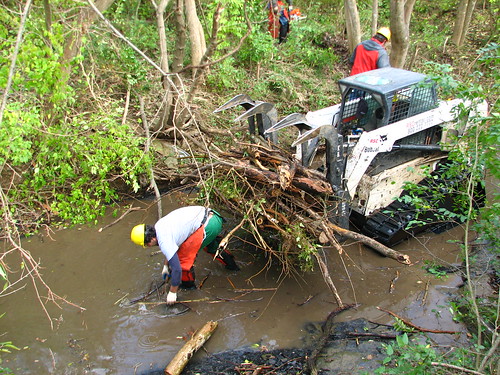
What part of NO don't these guys understand?
The living things in a half mile of this urban tributary of the West Fork of the White River were displaced and their habitat damaged for four days in November 2009 with no apology.
On the day that these photos were taken, the NRCS announced a huge effort to improve water quality in many states, including Arkansas. How does treating the riparian zones of Fayetteville's tributaries of the White River and the Illinois River watersheds make sense when the agency's overall mission includes protecting and enhancing such areas?
Release No. 0586.09
Contact:
Brad Fisher (202) 720-4024
SECRETARY VILSACK ANNOUNCES 41 WATERSHEDS TO TAKE PART IN MISSISSIPPI RIVER BASIN INITIATIVE
Initiative Will Provide Approximately $320 Million in USDA Assistance In Basin Area
WASHINGTON, November 23, 2009 - Agriculture Secretary Tom Vilsack today announced that 41 watersheds in 12 states, known as Focus Areas, have been selected to participate in a new initiative to improve water quality and the overall health of the Mississippi River Basin. The selected watersheds cover over 42 million acres, or more than 5 percent of the Basin's land area.
"The USDA is committed to working cooperatively with agricultural producers, partner organizations and State and local agencies to improve water quality and the quality of life for the tens of millions of people who live in the Mississippi River Basin, the Mississippi River Basin Healthy Watersheds Initiative will help" Vilsack said. "Today's announcement is another step toward achieving this goal, and I encourage as many eligible participants as possible to join us in this major conservation effort."
The Mississippi River Basin Healthy Watersheds Initiative (MRBI), which was announced on September 24, 2009, will provide approximately $320 million in USDA financial assistance over the next four years for voluntary projects in priority watersheds in Arkansas, Kentucky, Illinois, Indiana, Iowa, Louisiana, Minnesota, Mississippi, Missouri, Ohio, Tennessee and Wisconsin. MRBI will help producers implement conservation and management practices that prevent, control and trap nutrient runoff from agricultural land.
USDA's Natural Resources Conservation Service (NRCS) manages the initiative. NRCS State Conservationists from the 12 watershed states selected the watersheds with guidance from State Technical Committees and state water quality agencies. Selections were based on the potential for managing nitrogen and phosphorus -- nutrients associated with water quality problems in the Basin -- while maintaining agricultural productivity and benefiting wildlife.
Next, smaller watershed projects will be selected through a competitive process under NRCS' Cooperative Conservation Partnership Initiative (CCPI). NRCS assistance will be leveraged with contributions from partners, expanding the capacity available to improve water quality throughout the Basin.
Three requests for project proposals will be announced in the next several weeks, including one for CCPI. Funding for CCPI projects will come from NRCS' Environmental Quality Incentives Program, Conservation Stewardship Program and Wildlife Habitat Incentive Program.
Two other requests for proposals will fund projects through the Wetlands Reserve Enhancement Program and Conservation Innovation Grants. For information about these programs, visit www.nrcs.usda.gov/programs .
State(s) Watershed
Arkansas/Missouri - Cache
Arkansas - Lake Conway-Point Remove
Arkansas - L'Anguille
Arkansas/Missouri - Lower St. Francis
Illinois - Lower Illinois - Senachwine Lake
Illinois - Upper Illinois
Illinois - Vermilion (Upper Mississippi River sub-basin)
Illinois/Indiana - Vermilion (Upper Ohio River sub-basin)
Indiana - Eel
Indiana - Upper East Fork White
Indiana - Wildcat
Indiana/Ohio - Upper Wabash
Iowa - Boone
Iowa - Maquoketa
Iowa - North Raccoon
Iowa/Minnesota - Upper Cedar
Kentucky/Tennessee - Bayou De Chien-Mayfield
Kentucky - Licking
Kentucky - Lower Green
Louisiana - Mermentau
Louisiana/Arkansas - Bayou Macon
Louisiana/Arkansas - Boeuf River
Minnesota - Middle Minnesota
Minnesota - Root
Minnesota - Sauk
Mississippi - Big Sunflower
Mississippi/Louisiana/Arkansas - Deer-Steele
Mississippi - Upper Yazoo
Missouri/Iowa - Lower Grand
Missouri - North Fork Salt
Missouri - South Fork Salt
Missouri/Arkansas - Little River Ditches
Ohio/Indiana - Upper Great Miami
Ohio - Upper Scioto
Tennessee - Forked Deer
Tennessee/Kentucky - Obion
Tennessee - South Fork Obion
Tennessee/Kentucky - Red River
Wisconsin/Illinois - Sugar
Wisconsin/Illinois - Upper Rock
Wisconsin/Illinois - Pecatonica
For information about the Mississippi River Basin Healthy Watersheds Initiative, including eligibility requirements, please visit the MRBI web page at http://www.nrcs.usda.gov/programs/mrbi/mrbi_overview.html or your USDA Service Center. A map of the project area is available the MRBI Programs webpage.
Subscribe to NRCS news releases and get other agency information at http://www.nrcs.usda.gov or contact NRCS Public Affairs at 202-720-3210.
NRCS celebrates its 75th year of service in 2010.
USDA is an equal opportunity provider, employer and lender. To file a complaint of discrimination, write: USDA, Director, Office of Civil Rights, 1400 Independence Ave., S.W., Washington, D.C. 20250-9410 or call (800) 795-3272(voice), or (202) 720-6382 (TDD).
What part of NO don't these guys understand?
The living things in a half mile of this urban tributary of the West Fork of the White River were displaced and their habitat damaged for four days in November 2009 with no apology.
On the day that these photos were taken, the NRCS announced a huge effort to improve water quality in many states, including Arkansas. How does treating the riparian zones of Fayetteville's tributaries of the White River and the Illinois River watersheds make sense when the agency's overall mission includes protecting and enhancing such areas?
Release No. 0586.09
Contact:
Brad Fisher (202) 720-4024
SECRETARY VILSACK ANNOUNCES 41 WATERSHEDS TO TAKE PART IN MISSISSIPPI RIVER BASIN INITIATIVE
Initiative Will Provide Approximately $320 Million in USDA Assistance In Basin Area
WASHINGTON, November 23, 2009 - Agriculture Secretary Tom Vilsack today announced that 41 watersheds in 12 states, known as Focus Areas, have been selected to participate in a new initiative to improve water quality and the overall health of the Mississippi River Basin. The selected watersheds cover over 42 million acres, or more than 5 percent of the Basin's land area.
"The USDA is committed to working cooperatively with agricultural producers, partner organizations and State and local agencies to improve water quality and the quality of life for the tens of millions of people who live in the Mississippi River Basin, the Mississippi River Basin Healthy Watersheds Initiative will help" Vilsack said. "Today's announcement is another step toward achieving this goal, and I encourage as many eligible participants as possible to join us in this major conservation effort."
The Mississippi River Basin Healthy Watersheds Initiative (MRBI), which was announced on September 24, 2009, will provide approximately $320 million in USDA financial assistance over the next four years for voluntary projects in priority watersheds in Arkansas, Kentucky, Illinois, Indiana, Iowa, Louisiana, Minnesota, Mississippi, Missouri, Ohio, Tennessee and Wisconsin. MRBI will help producers implement conservation and management practices that prevent, control and trap nutrient runoff from agricultural land.
USDA's Natural Resources Conservation Service (NRCS) manages the initiative. NRCS State Conservationists from the 12 watershed states selected the watersheds with guidance from State Technical Committees and state water quality agencies. Selections were based on the potential for managing nitrogen and phosphorus -- nutrients associated with water quality problems in the Basin -- while maintaining agricultural productivity and benefiting wildlife.
Next, smaller watershed projects will be selected through a competitive process under NRCS' Cooperative Conservation Partnership Initiative (CCPI). NRCS assistance will be leveraged with contributions from partners, expanding the capacity available to improve water quality throughout the Basin.
Three requests for project proposals will be announced in the next several weeks, including one for CCPI. Funding for CCPI projects will come from NRCS' Environmental Quality Incentives Program, Conservation Stewardship Program and Wildlife Habitat Incentive Program.
Two other requests for proposals will fund projects through the Wetlands Reserve Enhancement Program and Conservation Innovation Grants. For information about these programs, visit www.nrcs.usda.gov/programs .
State(s) Watershed
Arkansas/Missouri - Cache
Arkansas - Lake Conway-Point Remove
Arkansas - L'Anguille
Arkansas/Missouri - Lower St. Francis
Illinois - Lower Illinois - Senachwine Lake
Illinois - Upper Illinois
Illinois - Vermilion (Upper Mississippi River sub-basin)
Illinois/Indiana - Vermilion (Upper Ohio River sub-basin)
Indiana - Eel
Indiana - Upper East Fork White
Indiana - Wildcat
Indiana/Ohio - Upper Wabash
Iowa - Boone
Iowa - Maquoketa
Iowa - North Raccoon
Iowa/Minnesota - Upper Cedar
Kentucky/Tennessee - Bayou De Chien-Mayfield
Kentucky - Licking
Kentucky - Lower Green
Louisiana - Mermentau
Louisiana/Arkansas - Bayou Macon
Louisiana/Arkansas - Boeuf River
Minnesota - Middle Minnesota
Minnesota - Root
Minnesota - Sauk
Mississippi - Big Sunflower
Mississippi/Louisiana/Arkansas - Deer-Steele
Mississippi - Upper Yazoo
Missouri/Iowa - Lower Grand
Missouri - North Fork Salt
Missouri - South Fork Salt
Missouri/Arkansas - Little River Ditches
Ohio/Indiana - Upper Great Miami
Ohio - Upper Scioto
Tennessee - Forked Deer
Tennessee/Kentucky - Obion
Tennessee - South Fork Obion
Tennessee/Kentucky - Red River
Wisconsin/Illinois - Sugar
Wisconsin/Illinois - Upper Rock
Wisconsin/Illinois - Pecatonica
For information about the Mississippi River Basin Healthy Watersheds Initiative, including eligibility requirements, please visit the MRBI web page at http://www.nrcs.usda.gov/programs/mrbi/mrbi_overview.html or your USDA Service Center. A map of the project area is available the MRBI Programs webpage.
Subscribe to NRCS news releases and get other agency information at http://www.nrcs.usda.gov or contact NRCS Public Affairs at 202-720-3210.
NRCS celebrates its 75th year of service in 2010.
USDA is an equal opportunity provider, employer and lender. To file a complaint of discrimination, write: USDA, Director, Office of Civil Rights, 1400 Independence Ave., S.W., Washington, D.C. 20250-9410 or call (800) 795-3272(voice), or (202) 720-6382 (TDD).
Tuesday, November 24, 2009
Waterfowl and many other wetland species must be grateful for the work of Ducks Unlimited
Please click on image to go to Flickr site and ENLARGE view of DU thanksgiving notice.

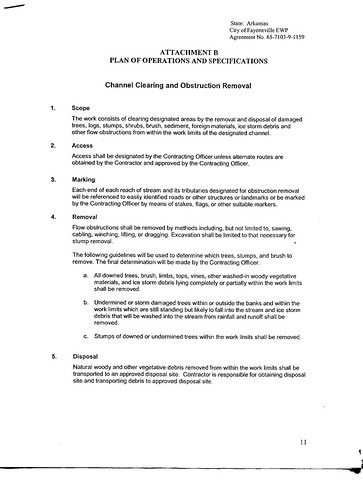
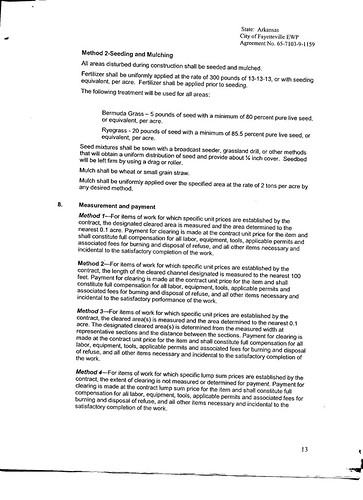
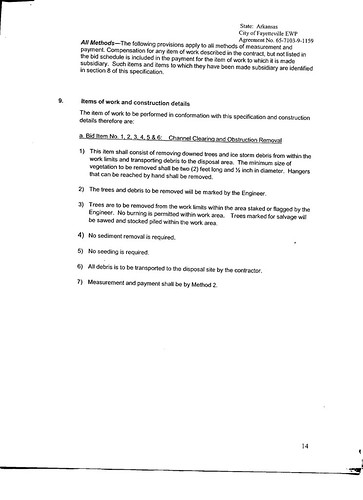
Instructions that Natural Resources Conservation Service contractors are supposed to be following
Please click on image to go to Flickr site and ENLARGE for reading and find related documents and photos.

Sunday, November 15, 2009
World leaders persist in ignoring climate-change problems
This copy is for your personal, noncommercial use only. You can order presentation-ready copies for distribution to your colleagues, clients or customers here or use the "Reprints" tool that appears next to any article. Visit www.nytreprints.com for samples and additional information. Order a reprint of this article now.
November 15, 2009
Leaders Agree to Delay a Deal on Climate Change
By HELENE COOPER
SINGAPORE — President Obama and other world leaders have decided to put off the difficult task of reaching a climate change agreement at a global climate conference scheduled for next month, agreeing instead to make it the mission of the Copenhagen conference to reach a less specific “politically binding” agreement that would punt the most difficult issues into the future.
At a hastily arranged breakfast on the sidelines of the Asia-Pacific Economic Cooperation summit meeting on Sunday morning, the leaders, including Lars Lokke Rasmussen, the prime minister of Denmark and the chairman of the climate conference, agreed that in order to salvage Copenhagen they would have to push a fully binding legal agreement down the road, possibly to a second summit meeting in Mexico City later on.
“There was an assessment by the leaders that it is unrealistic to expect a full internationally, legally binding agreement could be negotiated between now and Copenhagen, which starts in 22 days,” said Michael Froman, the deputy national security adviser for international economic affairs. “I don’t think the negotiations have proceeded in such a way that any of the leaders thought it was likely that we were going to achieve a final agreement in Copenhagen, and yet thought that it was important that Copenhagen be an important step forward, including with operational impact.”
With the clock running out and deep differences unresolved, it has, for several months, appeared increasingly unlikely that the climate change negotiations in Denmark would produce a comprehensive and binding new treaty on global warming, as its organizers had intended.
The agreement on Sunday codifies what negotiators had already accepted as all but inevitable: that representatives of the 192 nations in the talks would not resolve the outstanding issues in time. The gulf between rich and poor countries, and even among the wealthiest nations, was just too wide.
Among the chief barriers to a comprehensive deal in Copenhagen was Congress’s inability to enact climate and energy legislation that sets binding targets on greenhouse gases in the United States. Without such a commitment, other nations are loath to make their own pledges.
Administration officials and Congressional leaders have said that final legislative action on a climate bill would not occur before the first half of next year.
After his breakfast meeting in Singapore, Mr. Obama was scheduled to meet with Asian leaders and to hold a number of one-on-one sessions, including one with the Russian president, Dmitri A. Medvedev.
After his meeting with Mr. Medvedev, Mr. Obama will attend a symbolically important regional meeting of Southeast Asian nations, in which representatives of Myanmar’s government will also be present. Mr. Obama, who has made a point of his willingness to engage with adversaries, noted that for the first time an American president would be at the table with Myanmar’s military junta. But he has also called on the government to release the leader of the country’s beleaguered democracy movement, Daw Aung San Suu Kyi.
APEC summit meetings are not known for accomplishing much that is substantive. The most memorable moments often involve the photo opportunities, in which leaders wear colorful matching shirts. And often communiqués issued on dismantling trade barriers are undermined by the attending countries almost as soon as they are signed.
Speaking to world leaders at the APEC summit meeting Sunday morning, Mr. Obama said he would hold the 2011 gathering in Hawaii.
“The United States was there at the first meeting of APEC at Blake Island when President Clinton started the tradition of having leaders wear outfits picked out by the host nation,” Mr. Obama said. “And when America hosts APEC in a few years, I look forward to seeing you all decked out in flowered shirts and grass skirts because today I am announcing that my home state of Hawaii will be hosting this forum in 2011.”
This year’s meeting promises more of the same, complete with charges and countercharges of protectionism.
President Felipe Calderón of Mexico got things going early Saturday when he lashed out at what he called politically driven protectionism in the United States. He complained that Congressional coddling of the Teamsters had prevented the United States from opening its borders to Mexican trucks, which it was supposed to do years ago after it signed Nafta.
“Protectionism is killing North American companies,” Mr. Calderón said in Singapore. “The American government is facing political pressure that has not been counteracted.”
Mr. Obama is facing high expectations, which may be difficult to meet. For instance, while he has spoken about reducing trade barriers, he also talked during his speech in Tokyo on Saturday of making sure that the United States and Asia did not return to a cycle — which he termed “imbalanced” — in which American consumerism caused Asians to look at the United States as mainly an export market.
There are also high hopes among American companies and some Asian countries that the United States will commit to joining a regional trading group called the Trans-Pacific Partnership. Although Mr. Obama did open the door during his speech in Tokyo on Asia policy, he did not explicitly say that the United States would join the pact. A formal announcement that the United States is beginning negotiations would undoubtedly kick off criticism from free-trade opponents in the United States and pushback from Congress.
Mr. Obama spoke, instead, of “engaging the Trans-Pacific Partnership countries with the goal of shaping a regional agreement that will have broad-based membership and the high standards worthy of a 21st-century trade agreement.”
That line left many trade envoys already in Singapore scratching their heads: did Mr. Obama mean that the United States would begin formal talks to join the regional trade pact, which presently includes Singapore, Brunei and New Zealand, and could later include Vietnam — an addition that could lead to more Congressional pressure at home?
Many regional officials have been waiting for the United States to join the initiative as a demonstration that Washington will play a more active role in the region. But the Obama administration has yet to establish a firm trade policy, as it is still reviewing its options.
White House officials were not much clearer on what Mr. Obama meant when they were pressed on this after the speech. Mr. Froman, the deputy national security adviser, said that what Mr. Obama meant was that he would engage with the initiative “to see if this is something that could prove to be an important platform going further.”
Copyright 2009 The New York Times Company
Privacy Policy Terms of Service Search Corrections RSS First Look Help Contact Us Work for Us Site Map
November 15, 2009
Leaders Agree to Delay a Deal on Climate Change
By HELENE COOPER
SINGAPORE — President Obama and other world leaders have decided to put off the difficult task of reaching a climate change agreement at a global climate conference scheduled for next month, agreeing instead to make it the mission of the Copenhagen conference to reach a less specific “politically binding” agreement that would punt the most difficult issues into the future.
At a hastily arranged breakfast on the sidelines of the Asia-Pacific Economic Cooperation summit meeting on Sunday morning, the leaders, including Lars Lokke Rasmussen, the prime minister of Denmark and the chairman of the climate conference, agreed that in order to salvage Copenhagen they would have to push a fully binding legal agreement down the road, possibly to a second summit meeting in Mexico City later on.
“There was an assessment by the leaders that it is unrealistic to expect a full internationally, legally binding agreement could be negotiated between now and Copenhagen, which starts in 22 days,” said Michael Froman, the deputy national security adviser for international economic affairs. “I don’t think the negotiations have proceeded in such a way that any of the leaders thought it was likely that we were going to achieve a final agreement in Copenhagen, and yet thought that it was important that Copenhagen be an important step forward, including with operational impact.”
With the clock running out and deep differences unresolved, it has, for several months, appeared increasingly unlikely that the climate change negotiations in Denmark would produce a comprehensive and binding new treaty on global warming, as its organizers had intended.
The agreement on Sunday codifies what negotiators had already accepted as all but inevitable: that representatives of the 192 nations in the talks would not resolve the outstanding issues in time. The gulf between rich and poor countries, and even among the wealthiest nations, was just too wide.
Among the chief barriers to a comprehensive deal in Copenhagen was Congress’s inability to enact climate and energy legislation that sets binding targets on greenhouse gases in the United States. Without such a commitment, other nations are loath to make their own pledges.
Administration officials and Congressional leaders have said that final legislative action on a climate bill would not occur before the first half of next year.
After his breakfast meeting in Singapore, Mr. Obama was scheduled to meet with Asian leaders and to hold a number of one-on-one sessions, including one with the Russian president, Dmitri A. Medvedev.
After his meeting with Mr. Medvedev, Mr. Obama will attend a symbolically important regional meeting of Southeast Asian nations, in which representatives of Myanmar’s government will also be present. Mr. Obama, who has made a point of his willingness to engage with adversaries, noted that for the first time an American president would be at the table with Myanmar’s military junta. But he has also called on the government to release the leader of the country’s beleaguered democracy movement, Daw Aung San Suu Kyi.
APEC summit meetings are not known for accomplishing much that is substantive. The most memorable moments often involve the photo opportunities, in which leaders wear colorful matching shirts. And often communiqués issued on dismantling trade barriers are undermined by the attending countries almost as soon as they are signed.
Speaking to world leaders at the APEC summit meeting Sunday morning, Mr. Obama said he would hold the 2011 gathering in Hawaii.
“The United States was there at the first meeting of APEC at Blake Island when President Clinton started the tradition of having leaders wear outfits picked out by the host nation,” Mr. Obama said. “And when America hosts APEC in a few years, I look forward to seeing you all decked out in flowered shirts and grass skirts because today I am announcing that my home state of Hawaii will be hosting this forum in 2011.”
This year’s meeting promises more of the same, complete with charges and countercharges of protectionism.
President Felipe Calderón of Mexico got things going early Saturday when he lashed out at what he called politically driven protectionism in the United States. He complained that Congressional coddling of the Teamsters had prevented the United States from opening its borders to Mexican trucks, which it was supposed to do years ago after it signed Nafta.
“Protectionism is killing North American companies,” Mr. Calderón said in Singapore. “The American government is facing political pressure that has not been counteracted.”
Mr. Obama is facing high expectations, which may be difficult to meet. For instance, while he has spoken about reducing trade barriers, he also talked during his speech in Tokyo on Saturday of making sure that the United States and Asia did not return to a cycle — which he termed “imbalanced” — in which American consumerism caused Asians to look at the United States as mainly an export market.
There are also high hopes among American companies and some Asian countries that the United States will commit to joining a regional trading group called the Trans-Pacific Partnership. Although Mr. Obama did open the door during his speech in Tokyo on Asia policy, he did not explicitly say that the United States would join the pact. A formal announcement that the United States is beginning negotiations would undoubtedly kick off criticism from free-trade opponents in the United States and pushback from Congress.
Mr. Obama spoke, instead, of “engaging the Trans-Pacific Partnership countries with the goal of shaping a regional agreement that will have broad-based membership and the high standards worthy of a 21st-century trade agreement.”
That line left many trade envoys already in Singapore scratching their heads: did Mr. Obama mean that the United States would begin formal talks to join the regional trade pact, which presently includes Singapore, Brunei and New Zealand, and could later include Vietnam — an addition that could lead to more Congressional pressure at home?
Many regional officials have been waiting for the United States to join the initiative as a demonstration that Washington will play a more active role in the region. But the Obama administration has yet to establish a firm trade policy, as it is still reviewing its options.
White House officials were not much clearer on what Mr. Obama meant when they were pressed on this after the speech. Mr. Froman, the deputy national security adviser, said that what Mr. Obama meant was that he would engage with the initiative “to see if this is something that could prove to be an important platform going further.”
Copyright 2009 The New York Times Company
Privacy Policy Terms of Service Search Corrections RSS First Look Help Contact Us Work for Us Site Map
Friday, November 13, 2009
Red Oak Park plan would tear up the ground and displace mature trees and other significant vegetation but do nothing to protect the park from the huge upstream flow of water from the south, east and west
Red Oak Park Plan
MAYBE, this plan would help protect the property of the landowner downstream to the north toward Hamestring Creek. But it will totally miss the point of trying to protect the existing mature trees and will allow an incredible increase in erosion during construction and have only a minimal chance of improving the park in any credible way.
The only worthwhile and effective use of the money set aside for this plan would be KEEPING the water WATER WHERE IT FALLS: On the lots in the subdivisions to the south, east and west in raingardens created in the yards and in the treeless portion of the park at the southeast corner.
Helping people create raingardens using the natural soil remaining in the area and encouraging NOT to mow but to protect native vegetation there would decrease the dangerous runoff to a manageable level.
It is illogical to spend money doing some that won't meet the goals of the people who originally began complaining about the situation.
MAYBE, this plan would help protect the property of the landowner downstream to the north toward Hamestring Creek. But it will totally miss the point of trying to protect the existing mature trees and will allow an incredible increase in erosion during construction and have only a minimal chance of improving the park in any credible way.
The only worthwhile and effective use of the money set aside for this plan would be KEEPING the water WATER WHERE IT FALLS: On the lots in the subdivisions to the south, east and west in raingardens created in the yards and in the treeless portion of the park at the southeast corner.
Helping people create raingardens using the natural soil remaining in the area and encouraging NOT to mow but to protect native vegetation there would decrease the dangerous runoff to a manageable level.
It is illogical to spend money doing some that won't meet the goals of the people who originally began complaining about the situation.
Tuesday, November 10, 2009
Tour of Woolsey Wet Prairie and Fayetteville's westside sewage-treatment plant at 2 p.m. today precedes big evening for Illinois River Watershed Partnership
Illinois River Watershed Partnership
Annual Stakeholders Meeting
November 10, 2009
2:00 to 3:30 pm Tour of Fayetteville West Side Treatment Plant and Woolsey Wet Prairie
4:00 pm. Tour of Fayetteville Sam's Club
5:30 pm Hors d'oeuvres at Arvest Ballpark, Springdale
6:00 pm Sponsor Recognition and Golden Paddle Awards Reception
7:00 pm. Annual Membership and Board Meeting
Thank you for your dedicated efforts and support
to preserve, protect and restore the Illinois River Watershed.
To see evidence of the need for protection, please click on image to ENLARGE example of construction-site erosion in the Illinois River Watershed.
Annual Stakeholders Meeting
November 10, 2009
2:00 to 3:30 pm Tour of Fayetteville West Side Treatment Plant and Woolsey Wet Prairie
4:00 pm. Tour of Fayetteville Sam's Club
5:30 pm Hors d'oeuvres at Arvest Ballpark, Springdale
6:00 pm Sponsor Recognition and Golden Paddle Awards Reception
7:00 pm. Annual Membership and Board Meeting
Thank you for your dedicated efforts and support
to preserve, protect and restore the Illinois River Watershed.
To see evidence of the need for protection, please click on image to ENLARGE example of construction-site erosion in the Illinois River Watershed.
 |
| From Northwest Arkansas environment central |
Monday, November 2, 2009
Waterfowl migration map from Ducks Unlimited official site
http://www.ducks.org/migrationmap/?poe=migrationHQ
Saturday, October 31, 2009
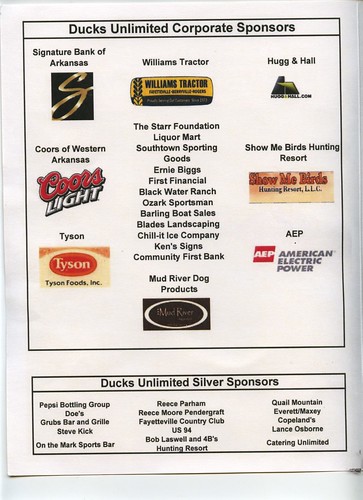
Thanks to all the 2009 sponsors of Ducks Unlimited banquet in Fayetteville, Arkansas
Please click on image to go to Flickr site to ENLARGE to read and to see related photos.
Friday, October 30, 2009
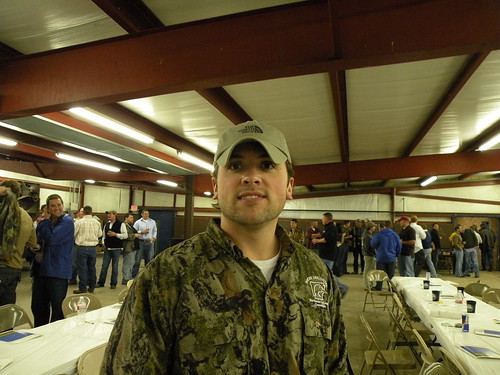
Energetic, experienced local committees make Ducks Unlimited fund-raising banquets succeed
Please click on image to go to Flickr site and ENLARGE photo and navigate to related photos.
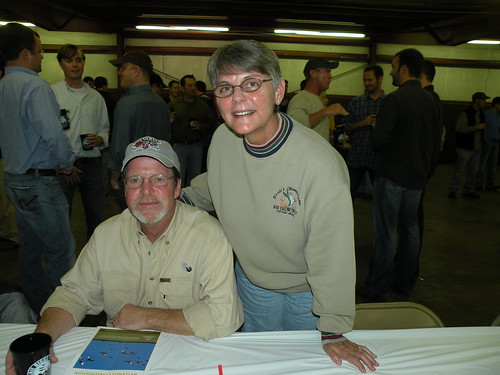
If you are wearing a World Championship Duck Calling Contest shirt at a Fayetteville DU banquet, you might have grown up on the Grand Prairie of Arkansas
Please click on image to ENLARGE of DU volunteer and his wife at 2009 Fayetteville DU fund-raiser for waterfowl habitat.
Doe's restaurant in Fayetteville among top sponsors of 2009 DU banquet
Please click on image to move to Flickr site and enlarge for better view of October 2, 2009 Ducks Unlimited banquet in Fayetteville, Arkansas.

Wednesday, October 21, 2009

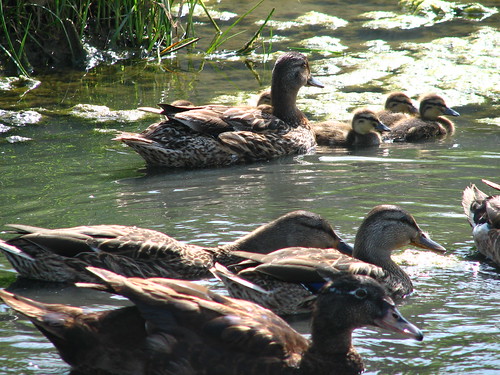
Momma duck does the bulk of the work: DU just keeps trying to protect her wetland habitat
Please click on image to go to Flickr site and ENLARGE view of two hens and ducklings in July 2007.
Thursday, October 15, 2009
Ducks Unlimited Banquet October 29, 2009, in Fayetteville, Arkansas
Please click on images to move to Flickr site and use magnifying tool above photo to ENLARGE for easy reading.


Tuesday, October 13, 2009
Green Groups Guild meeting Thursday
From: Green Groups Guild (ggg@listserv.uark.edu) on behalf of ggg (ggg@UARK.EDU)
Sent: Tue 10/13/09 2:31 PM
To: GGG@LISTSERV.UARK.EDU
Meeting 10/15/09 7:00 p.m.
209 Thompson Ave. Three Sisters Bldg on Dickson above Fez Hookah Lounge.
Patrick Kunnecke
GGG President
ASLA Vice President
4th Year Landscape Architecture Student
479-544-1906
Sent: Tue 10/13/09 2:31 PM
To: GGG@LISTSERV.UARK.EDU
Meeting 10/15/09 7:00 p.m.
209 Thompson Ave. Three Sisters Bldg on Dickson above Fez Hookah Lounge.
Patrick Kunnecke
GGG President
ASLA Vice President
4th Year Landscape Architecture Student
479-544-1906
Wednesday, October 7, 2009
Tuesday, October 6, 2009
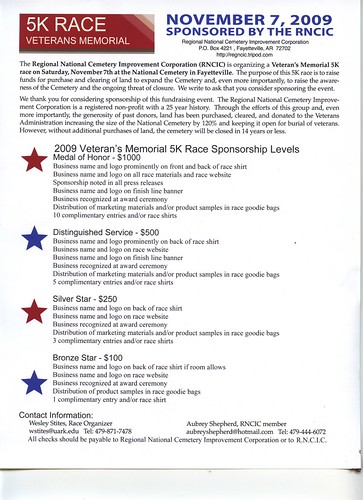
Runners and Sponsors sought for Nov. 7, 2009, 5K veterans' memorial race to benefit Fayetteville National Cemetery
Please click on image to move to Flickr site and ENLARGE for easy reading. The Regional National Cemetery Improvement Corporation meets at 10:30 a.m. Saturday October 10 and needs to add sponsor names to the file for the race T shirts and the brochures so that printing can begin. Already, Tyson Foods has donated at the Medal of Honor level and has challenged others to join them at the top of the list, thanks to the effort of RNCIC Secretary Peggy McClain.
Subscribe to:
Posts (Atom)

